Author: abdul

  • Making children more mindful

    Making children more mindful

    Making children more mindful 

    with the School of Joy programme

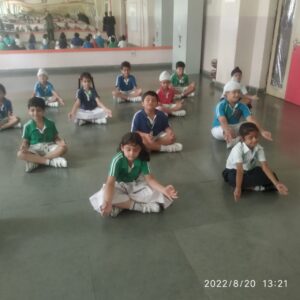
    Rohini Majithia, a teacher at The Shriram Millennium School, Faridabad, has been getting some rather unique responses from children of Grade 1 to the School of Joy programme’s meditation segment. After one such session, young Abeer felt good while Anayra reported she was a bit drowsy. “Ashrita said she heard the chirping of birds while Avira felt that all her body parts were getting relaxed,” she recalls. It is heartening to see just how aware children are becoming of their surroundings and their inner selves after meditation. 

    “Children have now started looking forward to the sessions; and have become more mindful while listening to the stories,” adds Majithia. The School of Joy programme by Little Light seeks to achieve just that. It focuses on building spiritual fortitude within children, and connecting them with their divine energy for a life full of joy and stability. The programme includes original stories based on spiritual insights, daily practice for self-reflection, projects for a deep dive into these concepts, and meditation for centering the self. 

    According to an article by Moonshot Conversations, which is focused on a new way of parenting to shape young minds, language plays a central role in defining and constructing our world view. “It makes sense to pay attention to what words we use as internal and external language,” it reads. In such a scenario, the stories that are part of the School of Joy  programme, and the subsequent oral reinforcements, by the teachers play a huge role in fostering a “growth mindset”—that talents and capabilities are not fixed but evolve through experiences. 

    Majithia has seen the changes in her students all through last year. Introducting self compassion for students has shown a great impact in children. They are more kind to themselves and less self critical.They now discuss their emotions and feelings a lot more freely than they would earlier. It has also strengthened the bond between the teacher and students. “When I am listening to a child, I am 100 percent there at that moment. Children are also more open as a result,” she says. According to the above-mentioned article by Moonshot Conversations, when a child receives praise not just for the outcome but for the strategy, effort and progress as well, the growth mindset is strengthened. And that is exactly what is happening at The Shriram Millennium School, Faridabad. 

    The School of Joy programme has highlighted the importance of communication and flow of energy between the teacher and the child. “Also, when they share their views, they are no longer judgemental. Rather, they are more accepting of themselves and of each other. The programme has brought the entire class together. They all feel valued,” elaborates Majithia. And indeed, the School of Joy programme focuses on authentic acknowledgment—that no child should be left behind!

  • Coping during the pandemic

    Coping during the pandemic

    “The School of Joy programme has turned me into a lifelong student. I used to think I knew a lot about life, students’ mindsets, and more. However, the curriculum and pedagogy of this programme is making me think constantly,” smiles Vineeta Rajput, principal, The Millennium School (TMS), Patiala. Little Light’s School of Joy programme is having a similar effect on education leaders across the country. It keeps students at the heart of it.

    In the past few decades, one has come across incidents of depression, mood-related disorders, anxiety, and more. Within society itself, there seems to be a void when it comes to happiness, leading to lowered productivity and compassion. To address this, the School of Joy draws upon learnings of positive psychology, spirituality and philosophy. Self Relection for kids is an important tool that supports them in connecting to their inner happiness. The focus is on ‘positivity’ and ‘positive emotions’. Being joyous is a way of being, and why should children not feel that sense of happiness!

    The field of positive psychology for children is witnessing in-depth research these days. One such study, titled Effects of Positive Psychology Interventions on the Well-Being of Young Children, cited in many articles on PubMed Central in 2021, states: “positive psychology emphasizes the importance of creating constructive living environments (e.g., families or institutions) throughout the life cycle. The promotion of healthy environmental systems, particularly healthy school environments, is essential to promoting the well-being and mental health of children and young children.”

    And School of Joy seeks to do exactly that. It combines teachings from the Bhagvada Geeta and Vedantas to achieve this. Using tenets of spiritual philosophies, it helps children acquire a sense of purpose and direction, experience joy even in the face of challenges, and dive into their own consciousness. The programme empowers children to develop into their own guiding spirits by just following the path of duty without worrying about the outcome.

    Through a unique pedagogy, comprising books, meditation, guided walks and conversations, teachers and leaders such as Rajput are helping students move beyond self-doubt to trust their inner selves. Self reflection for students is an important tool to guide them on a journey of self transformation.. A flow of energy envelops not just the students but the teachers as well, infusing them all with resilience and joy.

    For Rajput, the importance of the programme really shone through during the pandemic. It helped the children, teachers—and herself—cope with the difficult times. “I attended the entire course, and would get detailed questionnaires about a given situation and my probable reactions to them. It took me hours as I had to look deep within myself to answer. And that’s how the cycle of reflection began,” she says. She found the name of the programme itself so inviting—where happiness is key to empowerment and self-awakening.

    At TMS Patiala, the School of Joy programme was introduced one-and-a-half years ago. It has already been implemented for Grade 5 students and some portions are being used for Grades 6-8. Rajput has found that teachers have become more accepting of difficult situations that arise in class, and in life. “They are now more aware of where a child’s emotions are coming from, and what should be their role in such a scenario. There is more empathy,” she elaborates.

    When kids see the adults around them becoming more empathetic, they imbibe the same values too. Why is that so important at this stage of a child’s development? An article on Melbourne Child Psychology’s website mentions a psychology study of 900 11-13 year olds, which states that children with higher levels of empathy were more likely to engage in ‘assertive bystander behaviour’. “That is, they were more likely to stand up to a bully on behalf of someone outside of their friendship group.

    This kind of courage can be life changing for a child who is feeling isolated at school or being bullied, but doesn’t have the courage to stand up for themselves,” it states.

    Middle school brings with it a lot of self-awareness issues. There could be body shaming by peers, bullying of various kinds. However, Rajput and her team feels that due to the School of Joy programme, children have become more accepting of themselves and of their classmates. Self awareness for children is crucial to developing a strong sense of self identity and standing up to voices of criticism. “Bullying has come down for sure. Now children make each other understand the value of empathy, compassion and of being truthful. That is commendable at such a young age,” she says.

    The programme has also added to the relationship that Rajput shares with her teachers. There is a greater trust between them. “We do counseling for teachers anyway at our school. But now, I am equipped with so much more insight and training to delve deep, to get to know them better. They have also opened up with me a lot more,” she adds.

  • When the teacher becomes a learner

    When the teacher becomes a learner

    For Aarti Vig, a teacher at The Shriram Millennium School, Noida, the School of Joy programme has been full of learnings. Earlier, she was very quick to respond to people’s requests for suggestions or opinions. However, as she trained with the School of Joy coaches, she realised that each one of us is capable of finding our own solutions. “The idea is not to offer answers, but steer them towards asking the right and relevant questions so that they arrive at their own solutions. The path towards empowering others has been the biggest learning for me,” she says.

    The last two years have been fraught with uncertainties. However, she has applied strategies from the School of Joy programme to cope with the circumstances, and has passed those on to the children as well. It has been a joy to see them celebrate themselves and realise their own worth. “The programme focuses on how special and important they are, and how they can celebrate themselves while keeping the value of empathy alive,” adds Vig. This programme has been a unique journey of Self-discovery for students.

    At the heart of the School of Joy programme are values of love, joy, compassion, equanimity and gratitude. It helps a child embark on a journey of personal transformation by helping develop a healthy self and world-view. Led by counselors and educationists, the team has mapped how children’s cognitive and emotional abilities expand through the programme’s ‘Circles of Self’. From the self, they move to understanding their parents, friends and then the society, eventually discovering their connection with nature and the universe.

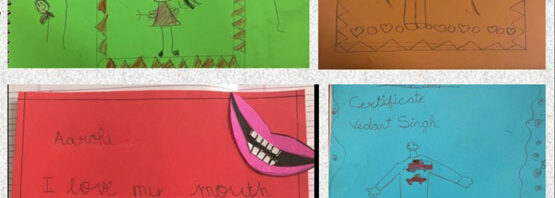
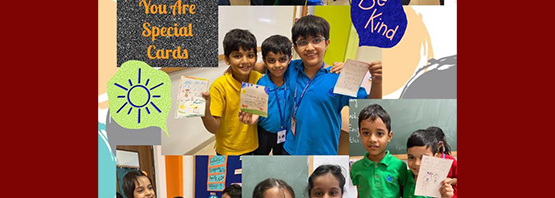
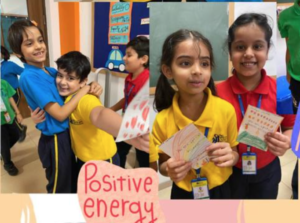
    This is not done in a preachy manner but through engaging stories and projects. “Children listen to these with a lot of interest. The ensuing exercises have been drafted keeping in mind multiple intelligences, so that each child feels involved. Kids have really enjoyed some activities like the ‘kindness tree’, journaling and ‘thank-you notes’, and more,” elaborates Vig.

    For her, as a facilitator, it has been a joy to witness this process of transformation. The programme offered a chance of self discovery for teachers and children. The meditation sessions have not only helped calm the children but herself as well. They have all learnt to enjoy the present moment. Slowing down, becoming a keen observer of nature and expressing gratitude have been some of the learnings for the class as a whole.

    There was one particular story on food that elicited a lot of reactions from the children. While one student mentioned that one should feel grateful for the food rather than worrying about how it is packed, some others discussed mindful eating. “Some children also talked about the daily activity of ‘walking in silence’ and how that enabled them to listen to the chirping of birds, feel the soft grass under their feet, and more,” explains Vig. “We have all learnt to use our senses mindfully and feel grateful towards nature.”

  • Bringing out your inner authentic self

    Bringing out your inner authentic self

    For a long time, a growing trend has been bothering Anuradha Gupta. When she was a young child, life was all about togetherness—dinner-time conversations and praying with the family. Summer vacations meant sitting on the terrace with grandparents, watching the sky and hearing stories. There was time and opportunity to connect with nature and one’s inner self.

    Now, however, children’s lives are about glitzy, flashy objects and experiences. It is about which country you went to during the holidays, which car do you have. I am really thankful to the School of Joy programme for highlighting that life is not about these external things but about discovering authentic happiness” The programme is about bringing out your inner goodness and embrace authentic living,” says Gupta, who is the principal of The Shriram Millennium School, Gurugram.

    She was introduced to the School of Joy while implementing another programme by its parent organisation, Art1st, which focuses on developing learning environments that nurture imagination and visual literacy among children and educators. “We were aware of the value system of the organisation. I felt there was something missing in the school’s programme that could be filled by the School of Joy programme,” says Gupta.

    Its ethos matched the school’s core values of sensitivity and integrity. As the programme unfolded, both the teachers and the students were encouraged to look within and introspect. “The decision to implement the School of Joy during the pandemic turned out to be fortuitous. So much was happening in the lives of both children and adults. A sense of peace was missing,” adds Gupta. During training, teachers were motivated to introspect and question what they wanted from life. They then went on to “expose the goodness” of the programme to the children. “Children enjoy stories. For teachers too, stories become a medium to transmit new and complex ideas,” says Gupta.

    For Grades 2-3, meditation proved to be a great tool for self-reflection. Twice a day now, the gong sounds in the school. And for that moment, students, teachers, and even guests, are encouraged to stay still and close their eyes. Members of the school have now started looking forward to these moments.

    For Gupta, the programme has proved extremely helpful on a personal level as well. “Often, I sit back and think about what is causing anxiety and stress. What is at the root of it? Why am I feeling like this? Once I figure that out, it’s easy for me to work towards improving my mental state,” she elaborates.The programme has given tools of Self-Reflection for teachers.

    The feedback from parents has been extremely positive. When classes were held in the online medium, even grandparents would sit in the sessions and observe the children’s reactions. “They are all very thankful that such a programme has been introduced at such an early stage of their child’s life. After all, we are all trying to find our inner authentic selves, and these kids have started on that quest so early,” she adds.