Author: abdul

  • Life Coaching benefits both clients and the coaches themselves!

    Life Coaching benefits both clients and the coaches themselves!

    Life Coaching services are intended to help clients reach their potential in terms of who they want to be or what they want to accomplish. Often, someone will seek a Life coach when they are feeling at a crossroads in their lives, or facing a period of stagnation. This goes to show that most people who look for Life coaches are usually those that believe that change is possible and that they have agency over their lives. Life coaches support clients by keeping the momentum for them to make the changes they wish to make.

    Apart from supporting clients to create and take accountability for their goals, another core purpose of Life coaches is to guide their clients to become more self-aware: strengths and weaknesses, personality traits, habits, and most importantly, core values. Core values are the foundation on which people should build their lives and make any future decisions. Life coaches ask questions to increase their clients’ self-awareness and constantly encourage them to revisit their core values to ensure alignment in decision making.

    Additionally, Life coaches offer support from a more objective, outside perspective, always with positive focus and the clients’ best interest in mind. In fact, Life coaches do not offer suggestions or advice. They are skilled at asking questions that compel their clients to delve deeper and look wider.

    You may be wondering what it takes to become a Life coach. Although life coaching draws from the disciplines of psychology, counselling and sociology, you do not need a degree in any of these disciplines. What you do need is a genuine interest in people, and in particular, supporting your clients in their pursuit of wellbeing and growth.

    To become a Life Coach, you need to complete a Life Coach Certification programme, such as the one offered by Little Light. Most programmes are around 60 hours of training, though you can begin coaching as soon as you have completed the first 40 hours. Most coaches narrow in on a niche in which they have some experience or expertise; for example, someone who comes from a recruiting background may offer life coaching to people who are at a point of career shifts in their lives. The Life Coaching Certification at Little Light is geared towards adults who work with children, so they can develop a niche for coaching children of different age groups.

    You may take up a Life Coaching Certification with the ultimate purpose of supporting other people, but I have a secret to share. Learning how to become a Life Coach is a transformative experience for  you too. It’s like an awakening or homecoming to who you truly are. I know that when I’m making most of my decisions now, I go back to my core values, and ask myself, “Is this decision in line with what I believe/want?” I also feel like I’ve just become a better, more mindful person. Our current cohort  have had similar experiences.

    One member of our recent cohort said, “The entire program revolves about feeling good about yourself and being content about what we have as an individual. Learning to appreciate who you are and what you are.” (Ramanjit Nagar, Principal, The Shriram Millennium School, Noida)

    Another offered, “I learnt to appreciate myself more. I have realised that it’s easy to be happy in life if we learn to appreciate ourselves more and not compare ourselves with others. Acknowledging myself for who I am makes me more confident. Not in a cycle of chasing ambitions or being in the rat race. I let people complete what they say and not interrupt them or preempt solutions/ advice.” (Neha Saw, Teacher at TSMS, Noida)

    If you want to explore a Life Coaching Certification, or are wondering how Life Coaching can benefit children, then check out the Little Light programmes on offer on our website
  • Positive Education: The key to increased well being in schools.

    Positive Education: The key to increased well being in schools.

    When Shilpa Sharda joined the School of Joy programme in 2021 at The Shriram Millennium School (TSMS), Noida, little did she know the effects of the programme would bring such a shift in the way she engaged with the world. As the programme entered the second year, she shared, “My shift from last year is that each and every moment I try to be and think in a positive manner. Any obstacle that’s coming my way, there will be a solution to it or else we have to look in a positive manner and things will be right. There’s nothing as such that we cannot solve – be it in school or be it at home.” This increased self confidence is a gift that many educators experience as they go through the programme.

    The School of Joy programme is built on the tenets of positive psychology, a field of psychology that focuses on positive human functioning and flourishing. Instead of trying to fix what is “wrong” with people, positive psychology asks how we can cultivate human strengths such as resilience, joy, and meaning. The practices in positive education support children in discovering their own strengths and engaging more positively with the world around them. In the words of Martin Seligman, the pioneer in the field of positive psychology, “The aim of positive psychology is to steer psychology away from the darkness and toward light.”

    It is this light that is discovered through the practices of mindfulness and gratitude which are two key principles of positive psychology. 

    Gratitude : The benefits of practising gratitude are endless. Research shows that expressing gratitude induces positive emotions and enhances happiness. It helps in building and sustaining long term relationships. Simple practices like sharing thank you notes, creating gratitude journals or just acknowledging gratitude for the good things in life have a positive impact on our health and well being.

    Mindfulness: 

    As per the Greater Good Science Centre, mindfulness means maintaining a moment-by-moment awareness of our thoughts, feelings, bodily sensations, and surrounding environment, through a gentle, nurturing lens. Practising mindfulness has many positive outcomes including diminishing stress and anxiety, increase in self awareness and enhanced wellbeing. Practices like mindfulness meditations, silent time and self reflections bring about a sense of calm and increased self awareness.

    Through the School of Joy programme, the children actively practise being more mindful and engaging more meaningfully through compassion and gratitude with the people around them. Through stories like “Who is it” children learn about the importance of being aware of every moment and using all their senses.

     Ramanjit Nagi, the principal of TSMS Noida shares, “The Little Light programme has taught us to accept what comes your way, even self praise. We have learnt to accept it gratefully. Embrace the positives and be proud of it. It has led to a journey of transformation knowing that you have the capacity to solve your own problems”

  • Therapy or Counselling or Coaching? How do I know what’s right for my child?

    Therapy or Counselling or Coaching? How do I know what’s right for my child?

    It is fairly common for parents to look to a variety of professionals for supporting the holistic development of their children. Often parents look to either complement or supplement what children are already learning in school (e.g tutoring or creative writing classes), to assist children in developing innate talents and new skills (e.g. piano lessons,, art classes),  and to involve their children in group activities that also allow for socialisation (e.g. cricket or football). 

    When it comes to supporting children’s mental health, emotional wellbeing and personal development, there are a plethora of professionals to choose from: psychologists, therapists, counsellors, and coaches. It can get confusing for a parent to know whom to look for and what kind of support their children may need. This article seeks to clarify some of the main similarities and differences.

    What is Therapy?

    A parent would seek therapy for their children if they are concerned about how their child is interacting with the world in general. For example, if a child presents with acute sadness, lack of motivation, or persistent worry, a parent could see the help of a therapist. The role of the therapist is to uncover the root  cause for a child’s state of mind, understand how trauma could be affecting the child’s relationships, and work with the child to shift disruptive patterns or behaviour.  A therapist helps children regulate their thinking and emotional responses, and provides the child with strategies they can use independently.  Often, children will confide in therapists the worries that they feel they cannot share with their immediate caregivers or when the whole family is working through something that has impacted them all (e.g. loss of a family member). Therapists are often trained in psychology and/or counselling and other related or more specialised fields. Therapy is typically a medium to long term intervention and focuses on revisiting the past in order to support the way that children navigate their life in the present.

    What is counselling?

    Counselling is very similar to therapy and the terms are often used interchangeably. However, the  main difference is the duration. Counselling typically lasts for a shorter term than therapy. Parents may seek a counsellor for their child in order to help with specific events or challenges, where the parent anticipates that the child may have difficulty in coping  e.g. navigating a relationship with a particular person, losing a pet, recovering from an accident or illness. Similarly to therapists, counsellors work with children on challenges that have happened in the past, or that a child may be experiencing in the present. Counsellors encourage children to talk about the problem they are facing, which allows them to see it from the child’s perspective. The counsellor will then help the child identify the root causes, and come to terms with the situation. Counsellors impart advice to children or give suggestions for what actions a child can take. Similarly to therapists, counsellors typically  have a psychology and/or counselling background.

    Counselling is typically short – medium term. Counsellors focus on one or multiple specific challenges that a child is facing, and help children resolve those challenges. 

    What is coaching?

    Coaching is different from counselling and therapy in a number of ways. One main difference is that coaching is future facing. A parent may seek a coach to support children with self-development, relationships, and skill development. Some of the areas in which coaches can guide children are in building self-awareness, maintaining emotional wellbeing, maximising their potential, and developing motivation. For younger children, parents may identify certain goals or skills they want the coach to work on. Older children are encouraged to determine their own goal areas.

    Another significant difference is that a coach never gives advice. In fact, the role of the coach is to help children  understand that they are self-sufficient and resourceful, and that they can come up with their own solutions.  Coaches are skilled at asking probing questions that lead children to dig deeper into themselves. A side effect of coaching is that often children get to know their value system, or the why of how they make certain decisions or take particular actions. 

    A third difference is that coaches hold children accountable for taking actions on the decisions they make. Coaches will revisit the child’s action list every time they meet. This helps children develop a clear sense of responsibility. And if children change their minds on their course of action, there are no repercussions. A coach will ask the child to reflect on their decision, and then take the next one. Coaching focuses on success and holding children in a positive light. There is no failure. Mistakes are just opportunities for learning. Children come to understand the power of self-efficiency,  persistence and a positive attitude. 

    Because coaching does not delve into past events or trauma, coaches do not need a background in psychology. However, they do need to be professionally trained and obtain a life-coaching certification. 

    Coaching is forward facing, and does not have a specific duration.  Coaches focus on goal areas that children have identified and chosen, and support children in making decisions and taking actions towards those goals. 

    Little Light Coach Certification programme

    In Brief

    The purpose of therapy and counselling versus coaching are clearly different. Therapy and counselling help children resolve issues of the present or past, while coaching assists children in their self-development for the future. Parents would seek out a coach to support their child in navigating their life optimally in the present and building the awareness and toolbox for facing future obstacles as opportunities and not challenges. Although life coaching for children is fairly nascent, it provides children with the potential to develop into self-assured, happy, and resilient individuals. 

  • Is happiness what we think it is?

    Is happiness what we think it is?

    A lot of us measure happiness as the pleasure we derive from the fulfilment of our desires. The pleasure we derive when we buy a new car, when we finally get that promotion we had been waiting for. We create the image of a happy life from some imaginary conditions society tells us we must achieve or accomplish. Our life is then spent pursuing this happiness from outside goals and desires. Our aspirations to happiness can prevent us from seeing the richness we already possess within us. What if true happiness resides within us?

    Authentic happiness lies within us

    Think about the time you were in a zone, completely focused on your action and oblivious to any chaos around you. Your mind was still and calm. Authentic happiness lies in those moments of bliss we find when we are completely present. It is the state of mind when what we say, do and think are all in harmony. When our words and actions are in harmony with our thoughts, we are acting from our true authentic self and this leads to moments of authentic happiness.

    Teachers share thoughts during School of Joy programme

    As part of the teacher coaching sessions in the School of Joy programme, each teacher goes through a journey of self discovery as they look deep within themselves to understand their core values and define their life’s purpose. In this journey, they discover parts of themselves they didn’t realise exist before.

    When the teachers signed up for the Little Light “School of Joy” programme, they took the first step in this path towards working on themselves and connecting with their authentic selves. When we intentionally take time out to work on ourselves, the benefits in the long term are immense.

    Sonal Sehgal from TSMS Noida shared during one of the sessions, “I am the gardener of my own tree (of life). In order to keep my tree strong, I will work on my core values and use my strengths to nurture myself. This strengthens my roots and helps me withstand any obstacles in life.” This thought is what is helping the teachers to focus on simply being themselves.

    A beautiful sharing from Sadhana Singh amazed us by her understanding of the concept. “We have inbuilt core values that define our basic nature. WIth life’s experiences, there is a veil drawn on these core values and we are not able to act in accordance with our authentic selves. This causes an imbalance in our lives. I have decided to intentionally work on henceforth acting from my core values or authentic nature.”

    Impact of acting in harmony with our authentic self

    As we enjoy being authentic and ourselves, we experience a sense of bliss and even the people around us experience this happiness. Teacher shared how they have been practising being themselves and at times when they do not operate from that space, they experience disharmony or stress. When they take time out to spend time working on themselves, nourishing their beliefs and themselves, they can see a shift in their state of mind and are in a better place to interact meaningfully with others around them.

  • Coaching for Kids at Little Light

    Coaching for Kids at Little Light

    A series of synchronicities led me to Ritu Khoda and the work of Little Light. I browsed through a curriculum for children which was over and above the social-emotional learning curricula I had seen thus far. It is a spiritual curriculum, which guides children to acknowledge and recognize their own divinity, through stories and practices that encourage them to build self-awareness, identify areas for development  and talents, be empathetic and compassionate in their relationships with others and the planet.

    A unique aspect of the Little Light process is that the teachers are fundamental as conduits to the children receiving the curriculum. Teachers actively participate in an intensive coaching training, where they learn how to adopt a coaching mindset. The outcomes of the coaching training are many: teachers learn how to be present and give their undivided attention to students and colleagues and to truly  listen. They learn how not only to accept but to celebrate differences, how to frequently acknowledge children’s strengths and contributions. Teachers who adopt a coaching approach can empower children to believe in their own resourcefulness and capacity to find their own solutions. They guide children to spiritual fortitude. The programme helps bring self compassion in schools.

    I love Little Light’s approach; first the adults, and through the adults to the children. 

    I strongly believe that learning how to coach reconnected me to myself. I took off the masks and costumes and conditioning that I had acquired while growing up. And I believe that it’s only when you have done this for yourself, can you do this for others. I wish that I had learned to live like this from a young age, to not be afraid of being myself, because of the pressures of others, society, and the need to ‘survive’ the rat race that is our current life.

    I’m determined to share what I have learned with others who are or will face this. And even more determined that our children don’t get to a place where they have to unlearn so many things, and peel off their masks and costumes. I want children to be themselves, share themselves unabashedly, find their passions, follow their dreams, and share their unique contributions to the world. These are some of the reasons why I believe in coaching for children.

    What is Coaching?

    In recent years, the term, “coaching” has gained much popularity in mainstream culture. Prior to the 1990s, coaching was probably most associated with sports; for example, cricket and badminton coaches would help their clients become more effective and competitive players. In the 1990s, business and executive coaching gained momentum. In executive coaching, coaches work with clients to make them more effective in their workplace, often to build their capacity to grow into more senior leadership positions. 

    Life coaching, a relatively modern form of coaching, became popular in the 1990s and more so in the 2000s. People engage in life coaching to make improvements in broad aspects of life such as careers, relationships and personal development. More specific areas could include improving self-awareness, developing self-compassion, creating self-discipline and motivation, gaining clarity, building relationship skills and developing leadership potential. Research has shown that coaching is beneficial and has clear impacts on the self-confidence, wellness and work performance of adults.

    It is worthwhile to note that coaching is different from modes such as counseling, therapy and mentoring, primarily because it is based on forward action versus going into the past. Another significant difference in coaching is the relationship between the coach and the coachee. In a coaching relationship, the coach does not give advice to the coachee. Instead, a coach empowers their coachee to arrive at their own answers and solutions. We will explore further similarities and differences in a later article.

    I Understand Coaching for Adults – but Why for Children?

    Life coaching is not a term typically associated with children, and you may wonder why kids would even need life coaching. Believe it or not, children’s lives are complex and multilayered. Children also face a multitude of pressures such as parental expectations, peer pressure, academic standards or traumatic life experiences.

    Apart from interacting with their families, children also navigate lives at school with peers, with friends in their building complexes, and even virtual friends they may meet on the internet and through gaming. 

    Children’s belief systems are affected by their life experiences and socialization. Unfortunately, we have seen an increase in some of the negative impacts of these, namely fragile mental health conditions such as depression, anxiety and suicide. 

    Life coaching is a wonderfully empowering way of guiding a child to not only build self-awareness and self-compassion, but also to recognize and acknowledge their innate strengths and talents. It can help children validate their uniqueness, build self-confidence and self-trust, and become really certain of who they are as individuals. 

    Life coaching can support children to build healthy relationships, while retaining their identity and authenticity. It can also encourage them to maintain and nurture their relationships with peers and adults alike. 

    Coaching can help children know how to face and navigate challenging situations by increasing their resilience and ability to problem-solve. Through an increased understanding of the core of who they are, and their ability to exert self-control, children are more likely to navigate life from a much more positive stance.

    Why wouldn’t we want this for our children?

    How does Coaching for Children work?

    As a parent, you may be wondering how life coaching sessions for children work. Coaching sessions last about 30 – 40 minutes depending on the age of the child. It would be recommended that coaching sessions take place consistently (e.g. every week or every two weeks). A parent might have specific areas that they want the life coach to address, but it’s usually the child who determines the direction or topic for each life coaching session. Some of this depends on the child’s age, as well. 

    In any case, the initial goal would be for the coach to develop rapport and trust with the child. These form the basis of a successful coaching relationship. From here, coaches work with children on developing their self-awareness as well as assisting them in navigating any kind of challenging situations they may be facing at the time

    A coach always holds the best interest of the child at heart, and a core competency of coaching is to acknowledge the brilliance and uniqueness of each child. Coaching sessions are geared towards having a positive impact, and over time,  both the child and their family will notice the brighter inner light.

  • Little Light programs, Little Light School of joy

    Little Light programs, Little Light School of joy

    “Little Light is a beautiful journey. I enjoy every moment of the session. I have learned three important points to remember for a lifetime. Firstly I am a special being. I don’t care about the hurtful remarks of others because I am a special being. Secondly, whenever I doubt my potential, I take out my little self cheerleader to motivate myself. Thirdly, bad thoughts do not stay in my mind for long. I have learned a secret technique to shoo them away.” – These are the words of a young student Khwahish from The Millennium School, Amritsar. (TMS).

    These powerful words from a young child are the reason we believe the Little Light School of Joy program must be taken to all schools. TMS Amritsar began its journey with Little Light in June 2021. Little Light programs are created as a long term engagement to encourage deep learning and lasting impact. Throughout the year, the educators took the children through the stories, discussions and daily practices. Soon the children began to learn sadhanas they can inculcate in their daily life to help them connect with their inner selves and develop spiritual fortitude.

    What is spiritual fortitude ?

    Walking on a spiritual path is taking a journey to understand the core of our being and also know that we are all part of something that is greater than us. There is a significant link between the understanding of our identity and the greater purpose of our life. This path helps us build resources and a capacity for authentic engagement with the world. Walking down this path, we gather resources that help sustain us as we journey through life.

    Spiritual Fortitude is a measure of one’s ability to sustain an individual’s sense of self and purpose through their core beliefs, values and morals even in the face of challenging situations.

    Why must we focus on building spiritual fortitude ?

    Life is uncertain and as we go through life, we will certainly come across challenges and some of them may even feel overwhelming. It is then imperative that, early in life, we work on developing the fortitude to face these challenges with equanimity. Developing a powerful spiritual fortitude will keep us centered and anchored in our faith even when the waters around us are turbulent. It gives us the resilience to endure with that faith that this too shall pass.

    How can we begin this journey for ourselves and our children ?

    We all have within us this immense capacity to deal with life’s challenges. This capacity opens up to us as we begin to awaken to our authentic selves. The more time one spends in self-reflection and building self awareness, the more we begin to connect to our inner consciousness. We build a better understanding of who we truly are. This way we can begin to live a life in harmony with our authentic self.

    Young children , unencumbered by life’s experiences and the biases that are built because of it, are said to be most in touch with their inner light. It is our jobs as adults to keep this light shining bright. We can do so by guiding them on a journey of self reflection and help them grow into confident, stable and happy individuals who are able to face the challenges thrown by life, instead of being overwhelmed by them.

    The SCHOOL OF JOY program was created with the vision to awaken each child to their authentic self and find their inner joy. If you wish to begin this journey for your students, do check out the SCHOOL OF JOY program.

  • Journey of Transformation at TSMS Noida

    Journey of Transformation at TSMS Noida

    The ShriRam Millennium Schools (TSMS) hold dear to their heart the core values of Sensitivity, Integrity, Pursuit of Excellence and Pride in One’s Own Heritage. “When I first came across the Little Light School of Joy program, I was happy to see that the Little Light curriculum resonated well with our core values”, shared Ramanjit Nagi, principal at TSMS, Noida. “In different small ways, we have already been teaching children the importance of introspection and believing in the good within yourself. The Little Light books and activities connected very well with our philosophy and was a perfect addition to our curriculum making it much more organized”. The School of Joy program offered tools of self reflection for children.

    The School of Joy program was implemented in TSMS Noida with over 24 teachers. Over a year through several hours of coaching, the teachers were taken through a journey of self reflection and self transformation. Mrs. Aparna Rawal, Grade 2 teacher from TSMS Noida shared with us how she was initially apprehensive about implementing such a program in the classroom with her tiny tots. But as she went through the coaching sessions, she gradually saw the difference in herself. “If it can bring a difference in me, then I too can be a motivator to bring a difference in others which in my case are the children in the classroom”, were the proud words of Mrs. Aparna.

    The teachers have become more accepting of others’ perspectives. Ms. Ramanjit is happy that now most of the differences get resolved within the staff room and there are little to no conflicts broughts to her attention. The teachers have learnt new tools and strategies to resolve conflicts with more empathy. “I can be assertive and express my opinions while respecting others opinions too” says Mrs. Aparna. The coaching sessions created a safe space for the teachers to speak without fear of judgment. The process of being vulnerable and accepted by people around them has created a stronger bond between the teachers.

    The stories in the books brought about so many complex topics in a beautifully illustrated form to the children. The questions after each chapter provide a space for introspection and discussion. It is amazing to see the kind of thinking such young children are capable of. “I have come to know more about the children through these programs as I am now observing and listening more. Children have now started talking about their feelings. Their vocabulary to express their emotions has also increased.” shares Mrs. Rawal.


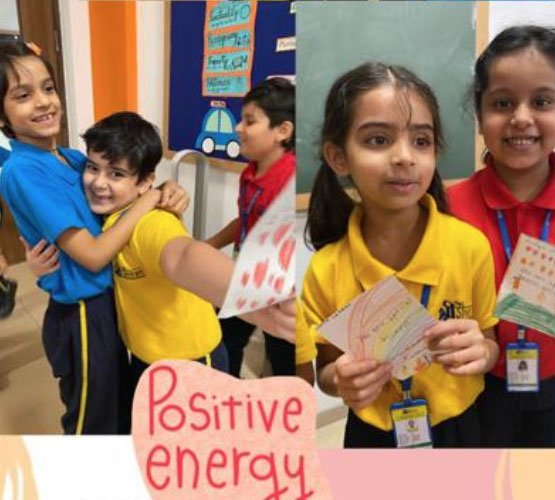
    The children love the meditation videos and ask for them to be used regularly. They even are asking the parents to join them in meditation practice. “We were fortunate”, says the principal, “that we started the School of Joy program during the pandemic. The parents too were able to witness and even participate in the program. We have had a lot of positive feedback from parents. The school of Joy program has a beautiful activity called “Windows to the Soul” in which we acknowledge the positive aspect and offer positive energy to each child. During one of the sessions, the teachers were surprised by the parents offering to conduct this activity for the teachers. It was a moment of joy”. Moments like this offer an opportunity for deepening connections between the school and families. 

    The Little Light “School Of Joy” program offers such moments of joy spun together in a beautiful tapestry. It creates a safe space of joy for both the teacher and the child to learn and grow on their own paths of self discovery and transformation.

  • The Little Light Programme Shows a Way of Life

    The Little Light Programme Shows a Way of Life

    For Ramanjit Nagi, principal, The Shriram Millennium School (TSMS) Noida, the values of sensitivity and resilience are extremely important. These are some of the tenets that are followed rigorously across her school. And when she came across the Little Programme by the School of Joy, which drew upon positive psychology, spirituality and philosophy, Nagi felt an instant connection. “The programme resonated with the values of the school. It had a unique manner of inspiring the teachers and students to feel good about themselves, thereby bringing a positive change within them,” she says. When she went through the books and lesson plans, which were accompanied by engaging stories and yoga asanas, Nagi felt that the lessons contained within the programme would inspire the children.

    The school embarked on this programme during the first phase of the pandemic. The timing became crucial as children were going through a rough time, coping with illness in the family, adjusting to a virtual way of learning, and physically distancing themselves from their friends. At such a time, this programme came through like a manna, helping children and adults feel good about themselves and content with the current circumstances. “In a very worldly way of living, there is no end to what you want to acquire or achieve. But once you are at peace, the path ahead becomes clear,” elaborates Nagi. With the programme, even six-year-olds have been able to introspect and develop their self awareness.

    The benefits of developing self reflection and self awareness for students are many. According to an article by the Berkeley Wellbeing Institute, an introspective person is someone who regularly looks inward to try to understand their mind, thoughts, feelings, and inner workings. “They might engage in meditation or other contemplative practices. Or, they might just pause to self-reflect when something is bothering them, when they handled a situation poorly, or when they are just curious to learn more about themselves. “What was really going on?” they might ask themselves,” states the article, “We probably all do this to varying degrees. Deeper or more frequent introspection can help us gain clarity that helps us move forward and live our lives more effectively.”

    Nagi has already seen the process of introspection help the children in her school. They are able to handle adversities in a better manner. The discussions after each lesson, given in the Little Light programme, often elicits beautiful answers about looking at the positives in life. “They are also able to handle the negative in a more positive manner. This learning is important not just during the pandemic but otherwise as well,” she says.

    The programme has led to a personal transformation within the teachers as well. Practising self discovery for kids helps build awareness. It has also taught them to accept situations gracefully and how to move on from there. Once they know they are on the right path, the teachers are empowered with confidence in their ability to sort things out.“They know that they will sail through, come what may,” explains Nagi. The focus is on authenticity and being real. An article on the Elmhurst University website about powerful teaching strategies for connecting with students highlights the importance of this aspect. ““Being real” means sharing vulnerabilities and the challenges of learning and teaching. Teachers must show they are always learning, which means making mistakes, asking for help, and having to back up or even start over,” it states. And the teachers at TSMS Noida are doing exactly that.

    The school has received heartening feedback from the parents as well. Since the programme started during the pandemic, when the entire learning was online, families got involved in the process as well. The parents understood how the programme led to positive transformation. They could see children in the peer group appreciating one another. “So, the parents decided to do this process of acknowledgement for the teachers. To see the teachers, parents and children experience the programme has been a beautiful experience,” says Nagi.

    Within the classroom, the programme has resulted in mindful teaching. Empathy now flows naturally between the Little Light coaches and the teachers, which then results in a far more empathetic engagement with the students. “The way of living and working has gotten streamlined,” she adds.

  • A child’s spiritual journey

    A child’s spiritual journey

    “Being someone who is already pursuing my own spiritual journey with my guru, I have always been curious about how to bring these learnings to young children. It is difficult to bring such complex concepts in a simple way that children can understand” says Shailaja Tandon, principal at TMS school, Amritsar. The School of Joy program does exactly that through beautifully illustrated stories and creating space for reflection, introspection and discussions through daily practices. 

    Even before the pandemic, much of what was considered normal in society was deeply problematic. Modern life is actually very stressful. We have moved away from nature, gotten into a race of acquiring more possessions and lost our connection with our own authentic selves. The pandemic has simply highlighted the issues that already exist due to modern life. The program came in at just the right time when it was most needed. Through the program, the children and teachers had a chance to explore their core strengths and develop environmental consciousness. 

    The pandemic triggered a lot of questions within children and adults alike. Questions of self doubt that arise in many as we experience life – “Why am I angry? Why am I the way I am?” The answers to these questions were explained wonderfully through the program. The School of Joy program used an inquiry based learning pedagogical approach creating spaces for children to reflect on the question and find the answers within themselves. In ancient times, the old way of learning in gurukuls was about asking students questions and setting forth on a journey to find the answers. In a similar fashion, after each story the teachers take the children through a journey of self reflection through the daily practices and projects.

    The stories themselves are well researched and very relevant to the children’s daily life.  Tandon spoke about one of the stories in the book – Rohit saves the day. “The friendship between Rohit, the son of a bhel puri vendor with children from a higher economic status was reminiscent of the beautiful friendship mentioned in mythology about the friendship between Lord Krishna and his dear friend Sudama”. The story created a space for children to reflect on their own interactions with people of varied socio-economic status. The answers from children were authentic and refreshing. It triggered an honest discussion about what stops us from mingling with people from diverse socio-economic backgrounds. As the children explore various perspectives through the stories, there is a subtle shift seen in their own behavior.

    Students and teachers have taken a step towards self transformation through the School of Joy journey. A shift in the child’s behavior can be seen as they use tools picked up from the daily practices in the book to manage their anger or regulate emotions. TMS schools have always had meditation and self awareness as an integral part of their ethos. Even before the Little Light program, the school played meditation audios for 5 mins at the start and end of school. With the Little Light program being implemented in primary classes, there is significantly more seriousness and commitment to meditation as compared to the middle classes where the program has not yet been implemented. The program began a journey of self discovery for children.

    “It is my sincere hope that the Little Light program continues to be implemented in middle and high school too. A school’s job is not just to impart academics or finish curriculum. The School of Joy program must be a very important component of every school curriculum. The children actually need this. Without it, we are sending children out of school who can crack exams and score high marks but are not prepared to handle judgment or the harsh realities of the world.” adds Tandon. “I am excited about bringing the school of Joy program to the older students of the school soon.”

  • Building resilience at every step

    Building resilience at every step

    In the past few years, the mental health of young children has become extremely fragile—the incidence of depression and mood-related disorders has gone up. The covid-19 pandemic has only added to this with feelings of uncertainty and isolation uppermost on children’s minds. However, the School of Joy programme, with its focus on spiritual fortitude—a deep coping mechanism that helps people hold onto their faith and face difficult situations— hopes to change that. In an interview, published in Psychology Today, Daryl R. Van Tongeren, an Associate Professor of Psychology at Hope College, emphasised on the role of spiritual fortitude in character building and development, if people are able to transform their experiences of suffering into something meaningful. “Today, covid-19 is a big challenge. Tomorrow it could be something else. The idea of this programme is to empower kids to take anything head on,” says Sonali Gupta, principal, The Shriram Millennium School, Faridabad. 

    She has implemented the School of Joy programme for Grades 1-3. The pedagogy includes original stories based on spiritual insights, daily practice of self-reflection for children, projects for a deep dive into these concepts, and meditation for centering the self. TSM, Faridabad, has always been particular about the students’ mental health and well being, and the Little Light’s School of Joy proved to be a perfect fit with the school’s ethos. 

    “I am a person who believes in the power of stories. We all remember the tales that our grandmothers would tell us at night. And the School of Joy is very story-driven. That is its USP,” says Gupta. Grade 1 children might not be able to comprehend the ideas of body image, positive criticism, and more, when explained in plain terms. However, they are able to understand such complex ideas and emotions better through stories. The follow-up activities and quizzes further reinforce the values and concepts that teachers discuss in class. “Students are now becoming resilient and solution finders,” adds Gupta. 

    An article by the Center on the Developing Child at Harvard University states that it is never too late to build resilience in children. “The brain and other biological systems are most adaptable early in life… . Age-appropriate, health-promoting activities can significantly improve the odds that an individual will recover from stress-inducing experiences. For example, regular physical exercise, stress-reduction practices, and programs that actively build executive function and self-regulation skills can improve the abilities of children and adults to cope with, adapt to, and even prevent adversity in their lives,” it states. This does not mean that children will never experience challenges or emotional pain in life; it’s just that they will be able to handle it in a positive manner and cope with the outcome. Self awareness for kids is the first step to developing a strong spiritual fortitude. Teachers, parents and children are working together towards this goal as part of the School of Joy programme.

    Parents have been getting a glimpse of this unique classroom as well—earlier through the virtual medium when online classes were being conducted and now in the physical space whenever they come to school. They have also been observing the changes—some subtle and others more obvious—in their children over the past one year. In fact a parent applied some of the techniques in his office, thus creating a better environment for his colleagues.

    “Very often, you would hear parents complain that this generation is not so tolerant or so resilient. But have we as adults empowered them? As a school, we very strongly believe in this. And it is fortuitous that the School of Joy programme adds layers to this idea in such a big way,” says Gupta. 

    For her too, the coaching for teachers and the senior leadership has come with a set of positive takeaways. The foremost of these has been to be one with the moment. “Just feel the energy of that moment. It will clear so many things for you,” she adds. Self awareness for teachers is crucial to help them work on themselves and develop skills to guide children to live their life purpose. The coach certification for teachers is an added professional in their repertoire.