1500+
Children
50+
Educators
5
Schools

As we first looked at the online gaming scene in the Netherlands, it became instantly apparent: the way you transfer funds is as important as the games you choose. E-wallets have silently revolutionized the entire payment experience, providing a link between conventional banking and the immediate satisfaction today’s players demand. For betybetcasino, we have witnessed this trend speed up, with more Dutch players choosing digital wallets for their speed, privacy, and sheer convenience. This tutorial explains everything required about using digital wallets at an online casino, from the moment you open an account to the day you cash out a big win. We will cover the mechanics behind the transactions, the protective measures securing your funds, the typical timelines you should realistically expect, and the slight variations between the primary providers available in the Netherlands. By the time you finish reading, you will know not only which digital wallet to choose, but also how to employ it tactically for the most seamless casino experience.
The rise of e-wallets in the Netherlands is not a random event. It reflects a broader cultural familiarity with digital banking alongside a specific requirement for privacy that many Dutch players appreciate deeply. When you fund your account with an e-wallet, your bank statement shows a transfer to the wallet provider, not to a gaming operator. For players who prefer to keep their recreational spending confidential, this is a meaningful advantage that credit cards and direct bank transfers just cannot offer. Beyond privacy, the speed gap has become the decisive factor. A traditional bank transfer to a casino can require one to three business days, especially if it spans a weekend. An e-wallet deposit, by comparison, typically shows up in your casino balance within seconds. This instant availability means you can seize a promotional offer right away or join a live dealer game without missing a beat.
We also need to talk about the withdrawal element of the equation, which is where e-wallets truly surpass legacy methods. When you submit a payout back to a bank account, the processing time at the casino is only the first challenge. After approval, the funds can require additional days to process through the banking system. E-wallets shorten this dramatically. Once Betybet Casino authorizes your withdrawal, the money often arrives in your e-wallet within hours, and from there you can either spend it directly via a linked card, transfer it to your bank, or hold it in the wallet for your next session. The command this gives you over your funds is considerable. You are no longer relying on two separate institutions to align; you have an active intermediary that works at the pace of software rather than the rate of batch processing. For the analytical player who monitors their gaming budget carefully, this real-time visibility into your balance is extremely valuable.
The legal environment in the Netherlands also matters in e-wallet adoption. The Kansspelautoriteit (Ksa) imposes strict licensing requirements that feature robust player protection measures. Licensed operators must confirm player identity thoroughly. When you employ an e-wallet, much of that verification work has already been completed by the wallet provider, which is itself a regulated financial institution. This creates a smoother onboarding flow. You are essentially presenting a pre-verified financial identity to the casino, reducing the friction of submitting additional documents for every transaction. For Dutch players who value efficiency and have already adopted digital identity systems like iDEAL for everyday purchases, e-wallets represent a natural extension of the same principle into the gaming space. The coordination between a well-regulated market and well-regulated payment tools fosters a safer, faster ecosystem for everyone involved.
Let us shift from theory to practice and explore exactly what you will experience on screen when you employ an e-wallet at Betybet Casino. The deposit process starts in the casino cashier, which you enter after logging into your account. You select your preferred e-wallet from the list of available payment methods. The casino will display the minimum and maximum deposit amounts for that method, which typically vary from €10 to €5,000 per transaction, though exact limits change by provider and your account status. After specifying the amount, you press the deposit button and the system sends you to your e-wallet’s secure login page. This redirect is critical because it means the casino never sees your wallet password. You log in using your wallet credentials, and in many cases you will also have to approve the transaction via a push notification or SMS code if you have two-factor authentication enabled, which you absolutely should.
Once you confirm the payment, the screen redirects back to the casino and your balance refreshes immediately. You will also get a confirmation email from both the casino and your e-wallet provider, which we recommend keeping until the transaction appears on your wallet statement. The entire process, from clicking deposit to seeing the funds in your casino account, typically lasts under thirty seconds. If the redirect encounters an error for any reason, do not try the deposit again immediately. Check your e-wallet app to see if the transaction went through despite the redirect error. Duplicate deposits are a common frustration that can tie up funds unnecessarily while support teams handle the double charge. A quick check of your wallet balance and transaction history will show you whether the money moved before you try again.
The cashout procedure needs a bit more patience and readiness. Before you can withdraw to an e-wallet, the casino must confirm that you possess the wallet account. This typically means making at least one successful deposit with that same wallet first. Some operators require you to provide a screenshot of your wallet profile displaying your name and email address. This is a one-time verification step that enables the withdrawal function for that payment method. When you are ready to cash out, go to the withdrawal section of the cashier, select your e-wallet, and specify the amount. The casino will display the estimated processing time, which at Betybet Casino typically falls within a 24-hour window for e-wallet payouts, though many requests are processed much faster. After the casino approves the withdrawal, the funds land in your e-wallet, normally within minutes to a few hours. From there, you decide whether to use the money directly, move it to your bank, or save it for future play.
Grasping the technical flow of an e-wallet transaction helps you diagnose problems and understand where possible hold-ups arise. When you initiate a deposit at Betybet Casino using an e-wallet, you are not moving money directly from your bank to the casino. Alternatively, you are verifying your identity with your wallet provider through a secure API connection. The casino produces a distinct transaction request and sends you to your wallet’s login portal, or in some cases handles the authentication within a secure iframe. Once you approve the payment, the wallet provider right away guarantees the funds to the casino and processes the underlying bank transfer later, often in bulk transactions at the end of the business day. This decoupling of the guarantee from the settlement is the central innovation that allows instant deposits feasible. The casino depends on the wallet provider’s guarantee, so it deposits your account right away.
The cash-out process reverses this flow but includes a crucial verification layer. When you submit a payout, the casino’s payment team or automated system first validates that the e-wallet account belongs to you and corresponds to the identity documents you provided during registration. This is a regulatory requirement intended to prevent money laundering and fraud. Once verified, the casino initiates a transfer to your wallet provider. The speed of this step hinges significantly on the casino’s internal processes. Some operators aggregate withdrawal approvals and process them twice daily; others handle them continuously. After the funds depart the casino’s account, they typically show up in your e-wallet within minutes to a few hours, because wallet providers use real-time payment rails rather than legacy interbank systems. The final leg, moving money from your e-wallet to your bank account, can take one to two business days depending on whether you use a standard transfer or an instant withdrawal option that some wallets offer for a small fee.
One specific detail that often startles players is the role of currency conversion in cross-border e-wallet transactions. Even though Betybet Casino caters to the Dutch market and operates in euros, the e-wallet provider itself may manage transactions through different banking partners. If your wallet carries funds in euros and the casino works in euros, the transaction should go through without conversion. However, some wallet providers implement their own exchange rates if there is any currency mismatch, and these rates can be less advantageous than what your bank offers. We suggest checking your wallet’s currency settings before making large deposits. Make sure your wallet balance is held in euros to avoid unnecessary conversion fees. This small housekeeping step can save you a noticeable percentage over time, especially if you are a regular player who shifts funds frequently between your wallet and the casino.
When you submit financial information online, you are placing trust in multiple layers of security that must all function correctly. E-wallets provide a protective buffer between your bank account and the casino, which is their single most important security feature. If a casino were to experience a data breach, which is exceedingly rare at properly licensed operators, your exposed information would be limited to your e-wallet email address rather than your full bank account number, sort code, and personal details. This segmentation is a genuine risk reduction strategy that costs you nothing to implement. The e-wallet providers themselves are regulated financial institutions in their home jurisdictions. Skrill and Neteller, for example, are authorized by the UK Financial Conduct Authority, one of the most stringent financial regulators globally. This means they must satisfy capital adequacy requirements, isolate customer funds from operational accounts, and submit to regular audits.
From the casino perspective, Betybet Casino is governed by the license provided by the Kansspelautoriteit, the Dutch gambling authority. This license mandates mandatory security standards that encompass encryption of all payment data in transit and at rest, regular penetration testing of the platform, and strict protocols for handling player funds. The combination of a Ksa-licensed operator and a regulated e-wallet creates a security chain where every link is independently audited. No single point of failure can expose your full financial picture. We also would like to underscore the authentication mechanisms that e-wallets offer. Most major providers now include hardware security keys, biometric login on mobile devices, and real-time transaction alerts. If someone seeks to enter your wallet from an unrecognized device, you will know immediately. These features are often more advanced than what traditional banks deliver through their standard online banking portals.
Safe gambling safeguards also connect with e-wallet usage in ways that benefit Dutch players. The Ksa requires licensed operators to offer deposit limits, session timers, and self-exclusion options. When you employ an e-wallet, you can apply your own additional controls on top of these. Most e-wallets let you to set spending caps, lock your balance in a separate savings vault, or even block transactions to certain merchant categories. You can effectively establish a dedicated gaming wallet with a fixed monthly top-up, which enforces a hard budget constraint that is more difficult to circumvent than a casino-side limit alone. This dual-layer approach to financial control is something we advise to any player who takes bankroll management seriously. The tools are there; using them in combination provides you a level of oversight that no single platform can offer on its own.
The Dutch e-wallet market is not uniform. Numerous major providers contend for your attention, and each presents a particular set of features, fee structures, and limitations that can shape your casino experience. We will examine the most relevant options so you can arrive at an informed choice. Skrill has long been a dominant name in the gaming payment space, and its deep integration with online casinos means you will hardly ever encounter a licensed operator that does not support it. Skrill features a dedicated gambling wallet feature in some jurisdictions, though availability varies. Its VIP program can lower fees for high-volume users, which is worthy of investigating if you plan to move significant amounts. The main drawback we have observed is that Skrill sometimes applies fees for funding your wallet via certain methods, and its currency conversion rates are not always the most competitive.
Neteller, owned by the same parent company as Skrill, runs on a extremely comparable technical backbone but aims at a somewhat alternative user profile. Neteller has over time positioned itself as a high-end service with larger transaction limits and a extra substantial rewards structure for regular users. For Dutch players who plan to deposit and withdraw bigger amounts consistently, Neteller’s fee caps and loyalty tiers can make a concrete difference to your net cost of transferring money. Both Skrill and Neteller offer prepaid Mastercard products tied to your wallet balance, which implies you can use your casino winnings at every ATM or point-of-sale terminal that accepts Mastercard. This practically converts your e-wallet into a bank account substitute for gaming funds, a flexibility that traditional payment methods are unable to match. The application process for these cards is simple, though you need to check the issuance fees and ATM withdrawal limits before ordering.
PayPal holds a unique position in the local market due to its massive mainstream adoption. Many users currently have an active PayPal account for everyday online shopping, which lowers the barrier to utilizing it for casino transactions. PayPal’s buyer protection policies do not apply to gambling transactions, a point that sometimes confuses new users, but its security infrastructure and two-factor authentication options are among the strongest available. The trade-off with PayPal is that it is not widely accepted at all online casinos, and even when it is, withdrawal times can be somewhat longer than dedicated gaming wallets because PayPal uses its own review processes to gambling-related transfers. Apple Pay and Google Pay have also arisen as compelling options, though they act more as tokenized front-ends for your existing cards rather than standalone wallets. They stand out at deposit speed and security but are infrequently available for withdrawals, which means you will need a secondary method for cashing out.
Veteran users face problems with e-wallet payments, and many of these troubles are completely avoidable with some foresight. The most common issue we come across is the mismatched currency scenario. A player tops up their e-wallet in euros, sends money to a casino that is also active in euros, but somewhere in the chain the wallet provider executes the transaction in a different base currency due to the casino’s acquiring bank location. The result is a small but annoying conversion fee that eats into the deposit amount. The remedy is simple: before you deposit, examine your wallet’s transaction settings and make sure that the casino is marked as a euro-denominated merchant. If you spot any mention of currency conversion in the pre-transaction summary, pause and look into it before confirming the payment. A short message to the wallet’s customer support can clarify whether the fee is avoidable.
Another common frustration concerns withdrawal rejections that arise from name mismatches. Your e-wallet account is registered under a specific legal name, and your casino account must match exactly. Even a slight discrepancy, such as a middle initial on one account but not the other, or a shortened first name like “Willem” versus “Wim,” can trigger an automated rejection. The casino’s compliance team is required to verify that the name on the withdrawal destination matches the name on the player account. This is not arbitrary bureaucracy; it is a legal requirement under anti-money-laundering regulations. Before you do your first deposit, contrast the exact name format on your e-wallet profile with your casino registration details and correct any inconsistencies. If you have already deposited and are now facing a withdrawal rejection, contact support immediately with documentation showing both accounts belong to you.
Bonus eligibility is a less apparent but equally important consideration when selecting your payment method. Many online casinos, including Betybet Casino, apply terms and conditions to their introductory promotions and top-up offers that indicate which payment methods are eligible. E-wallets are at times excluded from certain promotions, or they may be eligible for a different bonus amount than credit cards or bank transfers. This is not a cause to steer clear of e-wallets, but it is a cause to read the promotional terms carefully before you deposit. The exclusion commonly occurs because e-wallets make it easier for bonus abusers to establish multiple accounts, a practice that legitimate operators diligently combat. If a certain bonus is significant to you, review the payment method suitability in the terms and conditions. If the bonus does not pertain to e-wallet deposits, you can reach an educated decision about whether to employ an substitute method for that individual deposit or to skip the bonus in support of the e-wallet’s swiftness and comfort.
The trajectory of e-wallet technology indicates even deeper integration with casino platforms and speedier, more open transactions. We can already witness the emergence of open banking APIs that enable e-wallets to initiate payments directly from your bank account skipping the intermediate step of pre-funding the wallet. This obscures the line between e-wallets and instant bank transfers, merging the speed of the former with the directness of the latter. For Dutch players, who taken to iDEAL as a national instant payment standard, this evolution will seem familiar and intuitive. The next generation of e-wallet services will probably present a unified interface where you can choose on a per-transaction basis whether to pay from your wallet balance, your bank account, or even a cryptocurrency balance, all within a single authentication flow. The casino experience will grow correspondingly smoother, with fewer redirects and faster confirmation times.
Biometric authentication is another horizon that will transform how we approve casino payments. Apple Pay and Google Pay already utilize fingerprint and facial recognition to authorize transactions, and standalone e-wallet apps are rapidly integrating the same functions. The security ramifications are considerable. A biometric verification is tied to your physical person, making it vastly more arduous for a fraudster to authorize a payment even if they have acquired your device and know your PIN. As these technologies become commonplace, the friction of entering an e-wallet for every deposit will lessen. You will simply press a button, look at your phone, and the funds will transfer. This ease of use has a additional benefit for responsible gaming: when transactions are smooth, the act of depositing becomes less emotionally intense, which can help players follow predetermined budgets rather than making impulsive top-up decisions in the heat of a session.
Regulatory developments in the European Union will also influence the e-wallet landscape. The revised Payment Services Directive (PSD2) has already mandated stronger customer authentication for electronic payments, and subsequent regulations are pushing for greater transparency in fees and faster settlement times. For casino players, this means the already narrow gap between e-wallet deposits and instant bank transfers will continue to shrink. The competitive pressure will force wallet providers to differentiate on features beyond speed, such as integrated budgeting tools, spending analytics, and loyalty programs that reward casino play specifically. We expect to see e-wallets that cater explicitly to gaming enthusiasts, with dashboards that display your casino spending alongside your other discretionary expenses, giving you a holistic view of your entertainment budget. Betybet Casino and other forward-thinking operators will likely integrate with these features, offering a payment experience that is not just fast and secure, but genuinely intelligent and personalized to your habits.
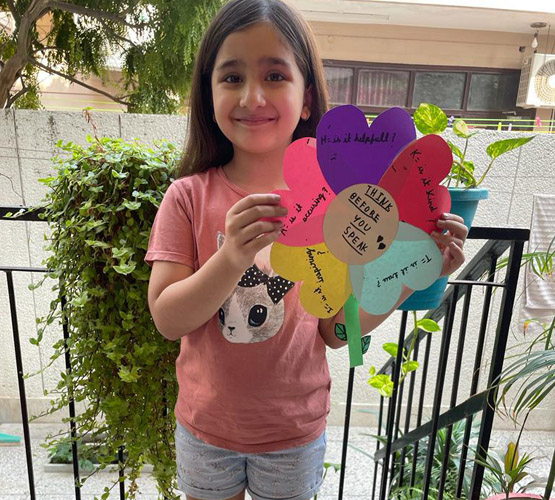


Children have now started looking forward to the sessions; and have become more mindful while listening to the stories.
Rohini Majithia, TSMS, Faridabad




Parents are all very thankful that such a programme has been introduced at such an early stage of their child’s life.
Anuradha Gupta, TSMS, Gurgaon






Interested in our School of Joy programme in your school?
Explore School of JoyAre you looking to become a life coach for children?
Become a Little Light CoachWith our programs launched in 2021, we have reached out to
Children
Educators
Schools






Sonali Gupta | Principal, The Shriram Millennium School, Faridabad


We wish to take the Little Light offerings to as many students, educators and schools out there. If you’d like to help us bring joy to the lives of children, there are many ways to help!
I want to support Little Light!PLOT NO. 3A, C-SCHEME, JAMNA LAL BAJAJ MARG, Jaipur, India: 302001
littlelight@littlelight.in
+91-9619-177-770
Little Light Copyright 2023 2026