1500+
Children
50+
Educators
5
Schools

Responsible gambling constitutes a organized framework of rules, resources, and actions that keep casino entertainment as part of leisure, preventing harm. For anyone utilizing platforms like hotlootcasino, comprehending this framework is foundational. All betting—slots, table games, live dealer sessions—functions on random outcomes and a built-in house edge, so sustained profit is statistically improbable. The central rule is to wager only money one can comfortably lose, considering deposits as an entertainment cost rather than an investment. This mindset separates recreation from harmful pursuit. Operators provide practical safeguards, but the initial step belongs with the individual. Implementing time management, budget discipline, and emotional awareness before logging in establishes a safer, more enjoyable experience. Responsible gamblers see wins as occasional bonuses and losses as the price of the session, never chasing outcomes. This calm, informed approach represents the essence of control.
A international network of professional support functions independently of any casino. Helplines with trained counsellors deliver immediate, confidential guidance, while online forums and peer chat services connect individuals facing similar struggles. Many services also assist family and friends, understanding gambling’s wider impact. Practical resources include clinically validated self-assessment questionnaires and financial counselling to manage debt. Specialised therapy, such as cognitive behavioural therapy adapted for gambling disorders, tackles underlying thinking patterns. Reaching out early can prevent deeper harm; services typically provide phone, chat, and email options to match personal comfort. Gambling disorder is a recognised psychological condition with effective treatments, and seeking help demonstrates strength, not weakness. These non-judgmental pathways guarantee no one faces the challenge alone.

A deposit ceiling limits the total amount that can be transferred into the balance over a day, week, or month. Once attained, the payment system declines any additional deposit tries, blocking new funds. A loss limit, based on net outlay—all deposits minus cashouts—initiates a stop when shortfalls hit a predetermined threshold, despite the available funds is not zero. This directly addresses the impulse to recover deficits. While a deposit limit blocks adding funds, a loss cap can halt a session mid-play, addressing the urge to recoup deficits with existing balance. When used in tandem, they form a comprehensive defense: one stops the entry of new money, the other limits the erosion of existing funds. Each should be established before starting, when judgment is sharpest, and regarded as strict limits.
Certainly not, a genuine self-exclusion is irreversible for its full duration. This policy exists to protect individuals from rash decisions made during periods of turmoil or desire. If exclusions could be readily lifted, they would be ineffective as protective barriers. For a six-month exclusion, the account is kept closed for the full term; the operator must refuse all service. When the period ends, the account does not automatically reopen. The player must actively contact support and undergo a mandatory cooling-off reflection period—usually twenty-four hours or more—before access can be restored. This deliberate delay stops an immediate return and offers a final opportunity to reflect. The firm irreversibility is a purposeful safeguard, ensuring that the barrier cannot be taken down on a whim and reinforcing the gravity of the commitment to stop.

Time awareness tools work seamlessly across all segments, including live casino environments. The system monitors duration since the last login or acknowledgment. At the pre-set interval, a non-intrusive but ongoing pop-up overlay emerges on the screen, halting all interactive elements. It shows the current session duration, total amount wagered, and net win or loss. The player cannot place bets or interact with the live dealer until the pop-up is actively closed. This forced pause is essential because the immersive, real-time nature of live dealer games—complete with human croupiers and high-definition streams—heightens time distortion. The social interaction in live games can further blur the perception of time and spend. The reality check functions as an anchor to real-world expenditure, interrupting automatic engagement and delivering a critical moment of conscious reflection.
Prompt action is vital if illegitimate access is suspected. The first step is to contact customer support through the standard emergency channel—often a 24/7 live chat—and request an instant account freeze. This blocks all transactions and gameplay while the situation is examined. Next, the account holder should reset the password to a robust, unique combination not used elsewhere and enable two-factor authentication if offered. Reviewing transaction history and login records aids identify any unfamiliar activity. From a responsible gambling perspective, a compromised account poses a danger of rapid, uncontrolled spending by an unknown party, potentially overriding personal limits. Swift action protects financial assets and the reliability of safety settings. Account security is a shared duty; players should stay vigilant and report any anomalies immediately.
Absolutely, a properly integrated responsible gambling framework provides functional parity across all access points. Settings such as deposit limits, loss limits, session timers, and self-exclusion status are associated with the player’s account, not a specific device. When signing in through a native mobile app on a smartphone or tablet, or via a desktop browser, the same restrictions apply universally. The user interface is tailored for each screen size but offers identical functionality, commonly available in the account settings menu. This seamless synchronisation means a deposit cap set on a desktop remains fully enforced when the player switches to a mobile device. There is no gap or loophole. The continuous, unbroken protective net ensures that personal safeguards are always active, regardless of how or where the service is accessed, maintaining consistent safety at all times.
Online gambling products rely on meticulously designed reward cycles to sustain involvement. Recognising these processes enables players keep in check. The core element is irregular stimulation: random payouts and the almost-win phenomenon—where symbols settle just short of a jackpot—trigger dopamine almost equally to a genuine victory, stimulating ongoing gaming. Furthermore, the illusion of mastery prompts players to believe their choices, such as pacing a round, affect chance outcomes. The irrecoverable expense trap compels people to persist wagering to recover losses, typically increasing losses. These are typical brain responses, not signs of a faulty strategy. Recognising them enables a player to step back, see the gaming period impartially, and halt automatic loops. Responsible gambling education focuses on spotting these mental biases, empowering conscious actions over impulsive ones.
Temporal distortion in digital casinos can make hours feel like minutes, disturbing sleep and responsibilities. Good management starts with establishing a strict session duration before logging in. Using an external alarm or the platform’s reality check tool reinforces the boundary; some platforms also offer automatic log-off after the time elapses. Reality checks are pop-up reminders that appear at chosen intervals, showing elapsed time, wagered amounts, and net results. They deliberately break immersion, prompting a conscious decision to continue or stop. Planning gambling as a distinct activity rather than a background filler stops mindless play. Steering clear of mobile play during other tasks like watching TV keeps awareness. By time-boxing sessions and honoring those boundaries, individuals keep the activity a deliberate recreational choice, not an automatic reflex, preserving both well-being and finances.
Problematic gambling hardly ever manifests overnight; it progresses through gradual behavioural and emotional shifts that are easily rationalised. Early recognition enables timely intervention before serious harm occurs. The slide often begins with mental preoccupation—replaying past wins or planning future sessions at the expense of work and relationships. Chasing losses is a major red flag, signalled by an urgent need to recover lost money immediately, often using funds meant for essentials. This can lead to secrecy, borrowing, and financial strain. Emotional changes, such as restlessness or irritability when trying to cut back, or using gambling to escape stress, signal a shift from recreation to a coping mechanism. Dishonesty about time or money spent reveals the individual knows the behaviour has crossed a line. Even one or two of these indicators justify a serious self-assessment and proactive use of safety tools.
When own limits prove not enough, more robust structural barriers are available. A cooling-off period provides a temporary voluntary break—generally from twenty-four hours to six weeks—during which the account is suspended and marketing emails end. This offers breathing room to reevaluate habits without lasting account closure. For more deep-seated patterns, self-exclusion permits a extended break, from six months to several years or indefinitely. Activation forms a binding contract: the operator must refuse service and return any remaining funds. Exclusion is irreversible for its selected term. Beyond a sole site, national self-exclusion schemes enable individuals to bar access to all licensed operators in a jurisdiction through a single application. To reinforce these measures, players can also stop gambling-related transactions via their bank and install website-blocking software. Integrating platform tools with external controls establishes a robust safety net.
A dedication to player safety is shown in readily available, open tools. A specialised Responsible Gaming page should be available from every part of the site, detailing all protections without demanding a login. Key features include adjustable deposit, loss, wager, and session time limits, along with a mandatory reality check that cannot be indefinitely dismissed. The platform must also offer a clear, time-ordered account history showing deposits, withdrawals, and bet logs, allowing an impartial view of net expenditure. Robust Know Your Customer (KYC) verification blocks underage access, and information on third-party parental control software adds household protection. Account closure and self-exclusion options must be straightforward, with specific reactivation terms. When all these features are in place and easy to use, players can set boundaries rapidly and confidently, signalling that player welfare is a core operational priority.
A protected environment is founded on official regulation. Reputable platforms are authorised by recognised bodies that require strict standards of operation, including the segregation of customer money from corporate accounts. This guarantees player deposits stays protected even if the provider faces insolvency. Fair play is assured by approved Random Number Generators (RNGs), externally audited to confirm chance-based results. Transparently reviewed Return to Player (RTP) percentages enable knowledgeable selections. Information security relies on sophisticated encryption like Secure Socket Layer (SSL), forming a safe channel for all dealings and personal information. Regulators also mandate transparent complaints procedures, providing responsibility. With this combination of licensing, fair algorithms, and online protection, players can devote attention to personal behaviour, understanding that the core system is free from concealed dangers.
Establishing a strong budget is the primary powerful way to maintain control. It begins away from the casino by pinpointing a particular amount of spare income that can be entirely lost without impacting necessary obligations like rent, bills, or groceries. That set sum becomes the recreation allowance for a given period. Once this amount is determined, it must be treated as an fixed boundary. Most regulated platforms offer mandatory deposit limits, enabling a player to cap daily, weekly, or monthly transfers. A loss limit extends, stopping play when net expenditure hits a limit, even if the account still contains funds. These tools perform best when set before a session, because feelings during a win or loss skew rational thinking. For further safety, players can isolate gambling funds using a specific e-wallet and consider limits as lasting fixtures, refusing any urge to adjust them during play.



Children have now started looking forward to the sessions; and have become more mindful while listening to the stories.
Rohini Majithia, TSMS, Faridabad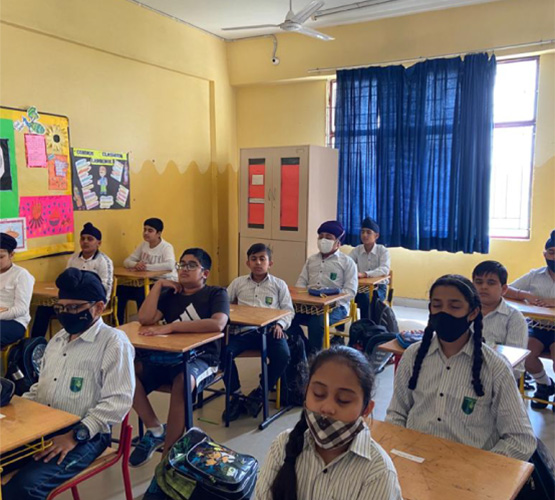




Parents are all very thankful that such a programme has been introduced at such an early stage of their child’s life.
Anuradha Gupta, TSMS, Gurgaon






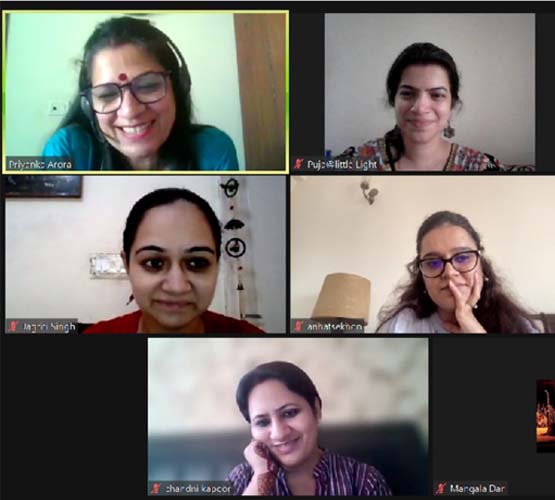


Interested in our School of Joy programme in your school?
Explore School of JoyAre you looking to become a life coach for children?
Become a Little Light CoachWith our programs launched in 2021, we have reached out to
Children
Educators
Schools






Sonali Gupta | Principal, The Shriram Millennium School, Faridabad


We wish to take the Little Light offerings to as many students, educators and schools out there. If you’d like to help us bring joy to the lives of children, there are many ways to help!
I want to support Little Light!PLOT NO. 3A, C-SCHEME, JAMNA LAL BAJAJ MARG, Jaipur, India: 302001
littlelight@littlelight.in
+91-9619-177-770
Little Light Copyright 2023 2026